March 2026 Part 2: Dongbei Vegetables + Sichuan Sticky Rice
March 19, 2026
Plays Well With Others
Greetings, Friends of The Mala Market,
While many of our recipes are spicy, flashy and complex, not every dish on a table should be so. Some dishes just need to be the supporting actors, making the whole spread more nuanced and balanced. So today we have two non-spicy—but by no means plain—dishes that play well with others.
Enjoy! 🌶 Taylor & Fongchong 🌶
Dongbei's Three Delicacies
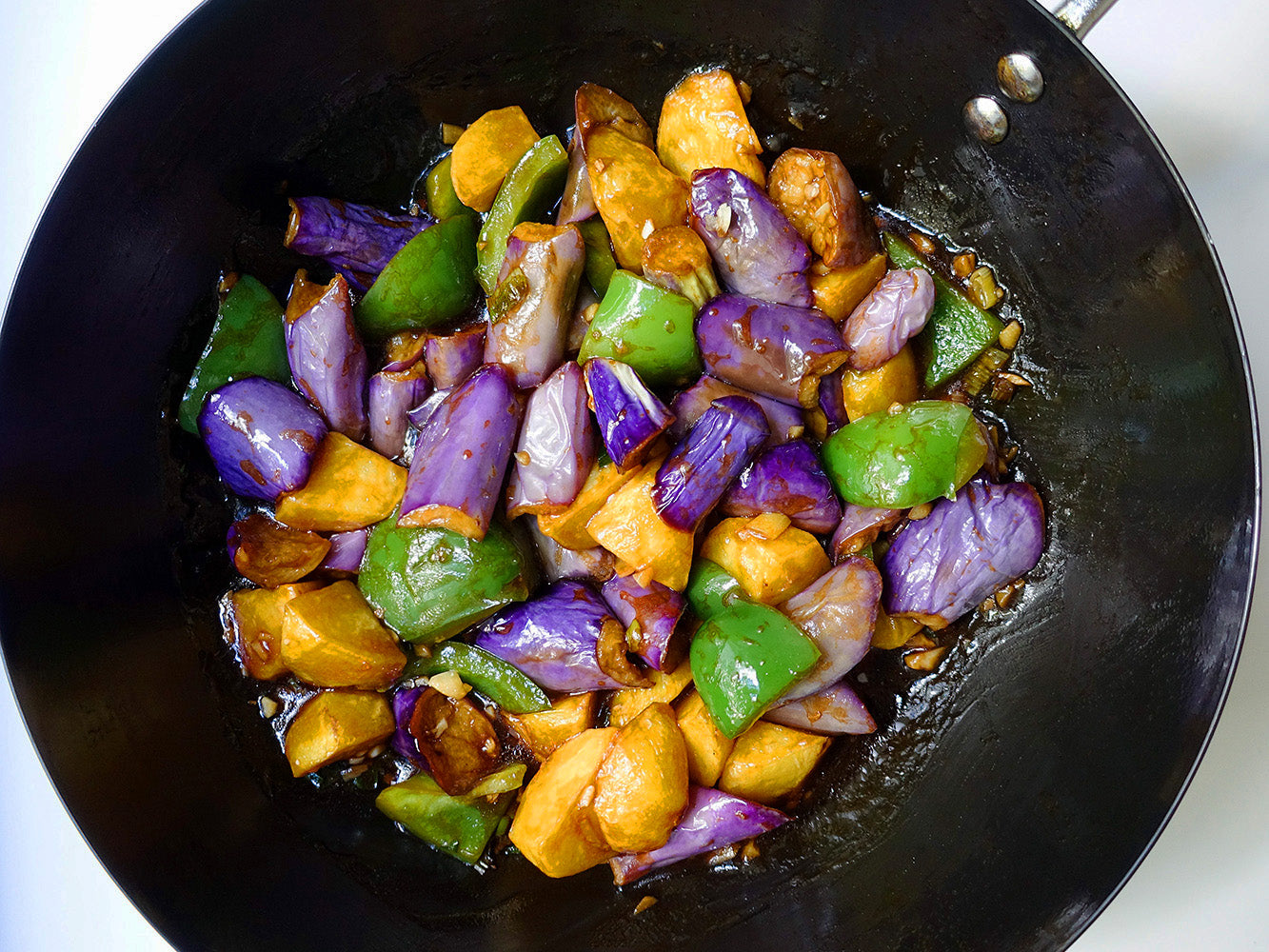
This is my idea of comfort food: hearty fried potatoes, eggplant and bell peppers glazed in an umami blanket of soy and oyster sauces. This dish would be welcome on any table—vegetarians can even omit the oyster sauce and it's still delish. Xueci Cheng gives us a little backstory on this Northeast China mainstay, as well as tips for getting it just right in your home kitchen.
"If you’re flipping through menus in Chinese restaurants, the term san xian (三鲜) can be confusing. Literally translated as “three delicacies” or “triple freshness,” it’s a flexible phrase whose meaning shifts with region and season. Originally tied to the pursuit of xiān (鲜), which can mean fresh and umami, it has countless variations. You might encounter sān xiāndumpling fillingswith pork, shrimp and chives, or a vegetarian mix of egg, chives and shiitake mushrooms. There’s also shù sān xiān (树三鲜), a trio of summer fruits like loquats, mulberries and cherries, and shuǐ sān xiān (水三鲜), referring to seasonal freshwater fish or water-grown vegetables in Jiangnan.
"Interestingly, this phrase originally referred to a different trio: fava bean, amaranth and cucumber (or sometimes garlic scapes), a combination popularized in Southern China. But when the combination of san xian reached the Northeast, home cooks reimagined it. Lacking these types of vegetables, they turned to what they could grow locally and created a version that was hearty, satisfying and affordable. From these humble beginnings, di san xian rose to national popularity and is now one of the region’s most iconic dishes."
If you're one of those ambitious people whose winter projects include making your own Chinese wind-cured pork belly, then this recipe, or one like it, may already be in your back pocket. But even if, like us, you buy your Chinese la rou at an Asian market, this recipe is one to know.
As Kathy Yuan writes: "Many parts of China have a variation of拉肉 (lā ròu), or "wind-cured" meat, plus sticky rice,but Sichuan's is one of the plainest. All it requires is the la rou, some green peas and ground Sichuan pepper. Though this may seem surprising, given Sichuan's reputation for flavorful dishes, it makes sense when you consider the rice's table bedfellows.
"Any given Sichuan meal may feature a spread of flavors—from intensely spicy to sour or bitter or just plain savory—so having a simple backdrop to eat them with is important. And since rice is served with virtually every meal besides breakfast or noodles, this dressed-up version simply replaces white rice on the table. When there's an abundance of la rou, that is."
Plain does not mean boring, however: Chewy, sticky rice with savory cured pork and crispy-fresh green peas is a treat in itself.Plus, if you've never tackled sticky rice, this rice-cooker method couldn't be an easier way to do so.
Have you ever noticed how many Chinese dishes like the Dongbei stir-fry above have a sauce made of some combination of soy sauce, dark soy sauce, oyster sauce and sesame oil? That's because the combination is irresistible, especially when the sauces are superior on their own—full of natural savory umami and devoid of additives and faux flavor.
You cannot get more pure than this Extra Pure Oyster Sauce from Fujian province. If you haven't tried it, here's what you're missing:
"This is the best oyster sauce on the market, and I’m speaking as someone who has had it my whole life and has tried various brands over the year as a Canto home chef. You can taste the greater percentage of oyster flavor as compared to other brands, which is so so delicious and fresh. Despite having no preservatives, my bottle’s expiration lasts over a year, which is fantastic, though I’m sure I’ll run out well before that. I wish I could get a subscription of this!"—Shannon D.
"I’ll never be able to use ordinary oyster sauce again. This is incredible stuff; the essence of oyster, not an oyster-ish sauce. I’m greatly enjoying making all my favorite dishes that call for oyster sauce just to savor the difference."—Beth J.
"After years of using Lee Kum Kee I tried this and I'm glad I did.I t has better oyster flavor, less raw salty/sweetness/fake caramel notes."—James C.