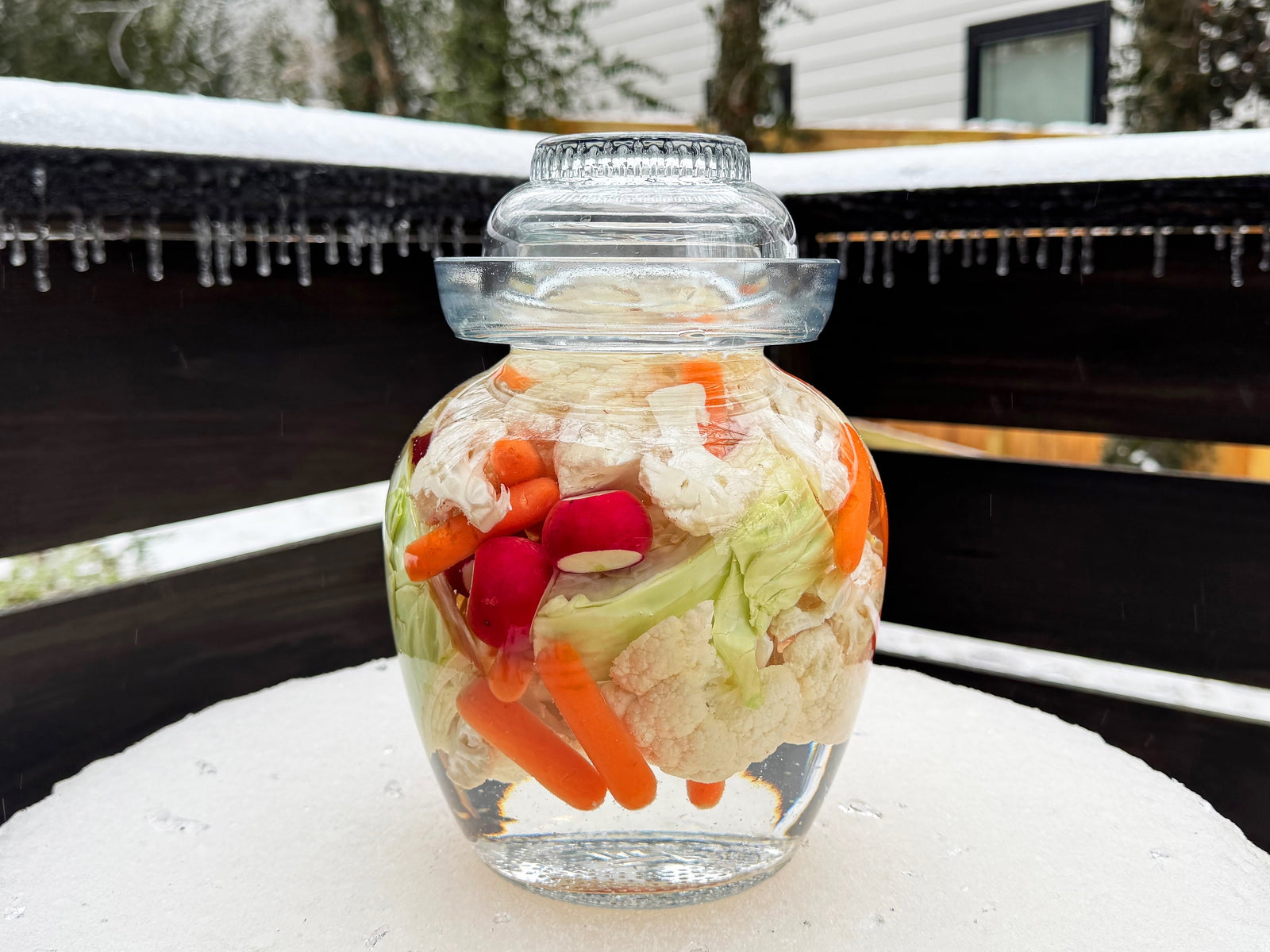
January 2026 Part 2: NEW Chinese Pickling Jars and Kits
January 29, 2026
Winter Pickles
Greetings, Friends of The Mala Market,
After a long absence, ourChinese pickling jarsare back in stock and—in a slightly new style—better than ever! While you might not automatically think of winter as pickling season, here are some reasons why it's the perfect time to ferment some vegetables:
1) The vegetables most commonly found in a Chinese pickle jar are winter crops: cabbage, carrots, radishes, cauliflower.
And
2) Heavy winter stews, soups and braises cry out for crisp, crunchy, slightly sour Sichuan pickles as a refreshing side dish.
Fortunately, our warehouse now has power and we have resumed shipping!
Stay warm out there, 🌶 Taylor & Fongchong 🌶
P.S. Thinking ahead to Lunar New Year celebrations, beginning this year on Feb. 17? See our suggestions below.
Sichuan Paocai Pickling Kit (2.5L Glass Jar for Lacto-Fermentation)
$70.00
This three-part, glass Chinese pickle jar is as functional as it is beautiful. In addition to the 2.5 liter (10 cup) jar, this Sichuan pickling starter kit includes Sichuan's specialty pickling salt, a small bag of Sichuan pepper for flavoring, and our meticulously tested recipe and instructions for making pao cai, or lacto-fermented pickles, the Sichuan way.
We previously imported a mouth-blown glass version of this jar. But after those shipped to us with extremely inconsistent quality, we undertook a major search for the highest quality machine-made jar we could find, prioritizing a perfected shape and durable thickness. You may notice that the jar has a slightly different shape than in previous years, with a bitmore elongated form and a more sharply defined water moat, as compared to the older designs.
Made to our specifications, including a classic smooth, unadorned design—other than small grooves on the top of the lid that help with grip—it also comes with a major improvement on the classic Chinese pickle jar: It's the only one we've ever seen with a glass insert that pushes the vegetables down entirely under the brine, for worry-free pickling without weights.(See photos of it on our site.)
Designed thousands of years ago to be the ideal form for naturally fermenting vegetables, our upgraded jar is the best of the old and the new.
Vegetables are not the only foods that get the fermentation treatment in China. We previously brought you a recipe for salted duck eggs, the lightly fermented eggs you can make with a salt brine in your fermentation jar. Those are not to be confused with "century eggs," or pidan, their darker and funkier cousin with yolks turned black from an alkaline fermentation.
Contributor Charlene Luo brings us this recipe for a century egg and eggplant dip that shows off the addictive funk of century eggs, which are in reality fermented for a mere three weeks. Charlene learned all about the process from a pidan master in Sichuan this past summer and shares the details with us inthis piece. Here's an excerpt about the dish itself, a wonderful introduction to the glories of pidan:
"Here in the States, non-Chinese cooks and eaters have long considered century eggs a type of “untouchable” food only fit for food challenges. (They most famously appeared on the television show Fear Factor.) But perhaps this is because Westerners are unaware of how to prepare this prized ingredient....
"At my weekly supper clubs in Brooklyn—where I serve some by-the-book Sichuanese dishes along with some newer takes on dishes from neighboring provinces—I’ve been making a dish that shows off this ingredient’s unique flavors:eggplant-century egg dip (léijiāo pídàn qíezi, 擂椒皮蛋茄子)....
"A variation of a Hunan-style cold dish, the original dish’s name is quite literal: 擂 (léi) refers to the act of mashing in a mortar pestle (or 擂子léizi); 椒 (jiāo) refers to chilies; 皮蛋 (pídàn) to a century egg; and 茄子 (qíezi) to eggplant. In traditional versions of this dish, these three key ingredients are mashed in a large mortar and pestle with garlic and other aromatics, then served at room temperature.
"...I’ve been using a somewhat unorthodox technique for making this dish: pulsing the ingredients in a food processor to make something more like a dip, instead of making the traditional version that more closely resembles a salad. The result is a deliciously rich, savory snack with an intense kick that’s balanced out with the crispy snap of the cucumbers and radishes that I serve alongside, to scoop up big bites."
Celebrate CNY With Hot Pot!
As promised, our recommendation for the most fun and least stressful Lunar New Year feast you can host: hot pot!
We've got recipes for several regional styles of hot pot:
Then a few days later I saw this video from our Shanghai friend Chris St. Cavish (and partner), who are making an incredible series of videos that delve deep into Chinese cuisines.