October 2026: Jiaoyan Wei (Salt-and-Pepper Flavor) Ingredients and Recipes
October 11, 2026
All About Jiaoyan Wei
Greetings, Friends of The Mala Market,
This month we're returning to our series on Sichuan's fuhe wei, or official complex flavor profiles, with jiaoyan wei: salt-and-pepper flavor! And because it's a Sichuan flavor, "salt and pepper" means salt and Sichuan pepper.
This is such a simple but powerful combination that it covers a whole category of dishes with just the two ingredients as the core flavor. Keep reading to learn more about how to combine them and what to cook with them.
To make it even easier to learn about each fuhe wei, we're putting some of the core ingredients that define each month's featured flavor on sale, at a (roughly) 25% discount! This month it is our legendary and rare Sichuan Tribute Pepper—and as a bonus, for reasons explained below, our popular Dipping Chilies.
In other news, our latest container shipment includes replenishments for red-oil doubanjiang and Yunnan rice noodles along with some new products to be rolled out soon.
Finally, another reminder that Fuchsia Dunlop has a new cookbook called Five Tastes coming in late October, and just as with her previous releases, she will be signing copies for us upon her arrival in the U.S. for her book tour. So if you can't make it to one of her talks, remember that you can get a signed copy from us sometime around Oct. 24.
This minimalist but striking combination has flavored Sichuan dishes for centuries—long before chilies made the scene in Southwest China.
Jiāoyán (椒盐), literally “pepper and salt,” is a popular spice blend that is used as a seasoning for a variety of dishes and as a dipping spice. It is popular in both Sichuan and Guangdong, but the mix takes different forms in each province. The version from Guangdong, which is the most familiar outside of China, relies primarily on white pepper (hú jiāo, 胡椒, or “foreign pepper”), sometimes combined with five-spice powder and garlic powder. You’ll find this combination in popular Cantonese dishes like salt-and-pepper tofu and salt-and-pepper shrimp. The version from Sichuan, however, uses the native Sichuan pepper.
Jiāoyán wèi (椒盐味), as its name suggests, is built around this seasoning mix—jiaoyan—which is made from toasting and grinding whole Sichuan pepper and salt until both form fine powders that are mixed together. This seasoning can be used many ways: It is sprinkled on deep-fried dishes, incorporated into pastries and snacks or sprinkled over the fried skin-on peanuts (huāshēngmǐ, 花生米) that are often served alongside congee or eaten as a drinking snack.
Jiaoyan wei is described as “fragrant, tingly and savory” (香麻而咸). While the base of the mixture is just Sichuan pepper and salt, there are versions that include other ingredients, such as fennel seeds, sesame seeds, MSG or sugar.
Because jiaoyan seasoning is so simple, the quality of the Sichuan pepper you use to make it matters a lot. Look for whole Sichuan pepper with deep red husks and almost no black seeds like Tribute Pepper from Hanyuan, for a cleaner taste. In Sichuan, cooks often use locally produced well salt from Zigong in their jiaoyan, but outside of Sichuan you can use any pure salt, such as fine rock salt, kosher salt or sea salt.
The ratio of salt to pepper in the jiaoyan seasoning is flexible. A ratio of 2 parts Sichuan pepper to 1 part salt, by volume, is a good place to start and is easy to measure without a scale.
To make the mixture, start by toasting Sichuan peppercorns until they are intensely fragrant and some of their oil is released. Once the peppercorns are ready and have cooled just a bit, grind them into a coarse powder with a mortar and pestle or a spice grinder and sieve the powder to remove the tough husks for a smoother texture. Then toast the salt in the same pan until it is light golden, allowing the moisture to evaporate and the salt to absorb the oil released by the pepper. Lastly, grind the salt and mix it with the ground Sichuan pepper.
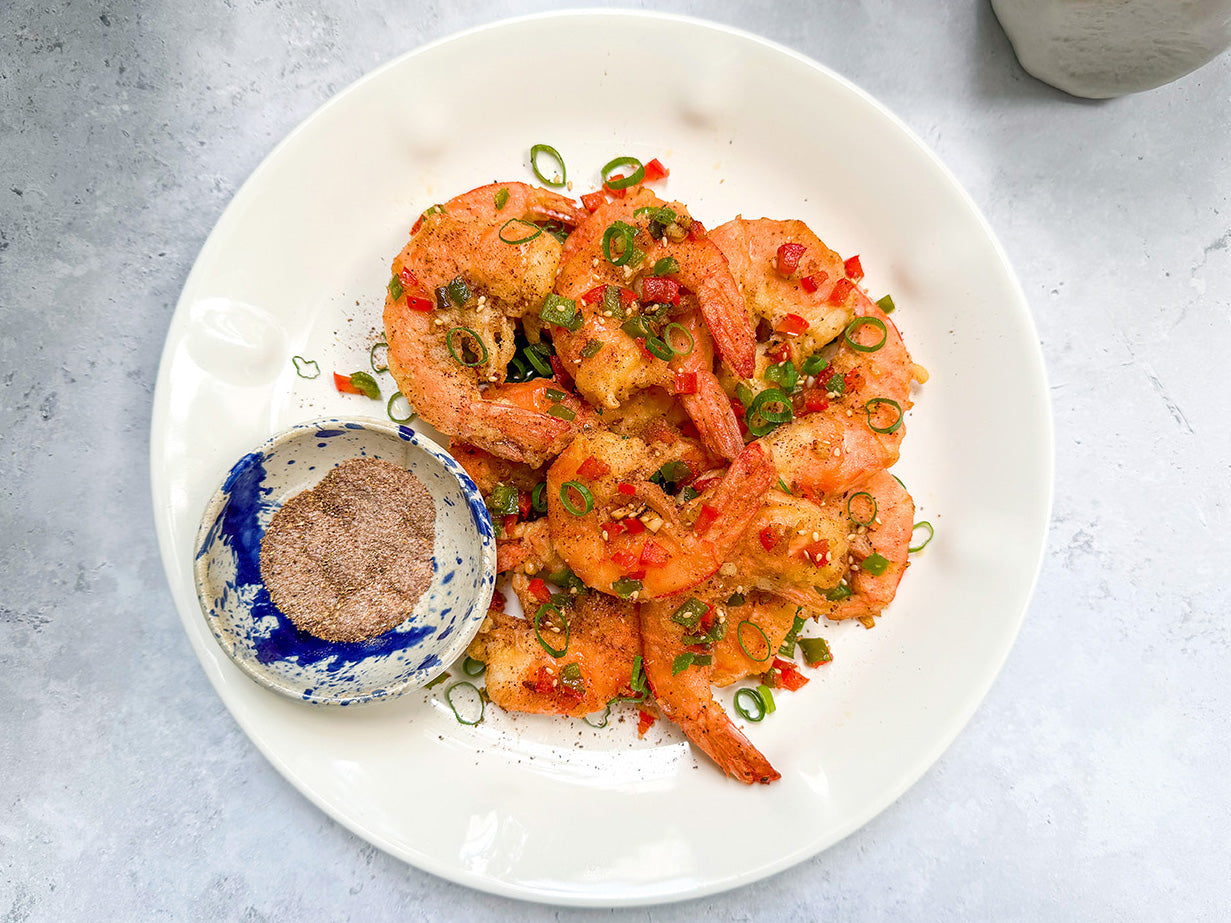
Sichuan Salt-and-Pepper Shrimp
Click on the photo/video above to see jiaoyan wei in action!
Our resident fuhe wei expert, Xueci Cheng, grew up with the Sichuan version of pepper-and-salt dishes and tackles a classic in this recipe:
"Outside of Sichuan, if you order salt-and-pepper shrimp you’re probably going to get the Cantonese takeout classic of the same name. The two versions are prepared quite similarly: Whole shrimp are deep-fried and finished with a pepper-and-salt seasoning. The biggest difference is the spice blend itself: The Sichuan version uses Sichuan pepper, while the Cantonese version relies on white pepper and may also include five spice and chili powder.
"My recipe is based on the version in Popular Sichuan Recipes (Dàzhòng Chuāncài,《大众川菜》), where the dish is called Pepper-and-Salt Crispy Shrimp (jiāoyán sūxiā, 椒盐酥虾). The book describes it as "crispy on the outside, juicy on the inside and a great drinking snack." The shell-on shrimp are marinated, coated in an egg-and-starch batter, deep-fried and finished with a sprinkle of jiaoyan seasoning. In my take, I also incorporate garlic and red and green chilis for extra aroma and color—these are common additions that you find in many newer versions of the recipe, including those served in Chengdu restaurants today.
"The heart of this fuhe wei is the jiaoyan seasoning itself, which is wonderfully versatile. Beyond this shrimp dish, it appears throughout Sichuan cooking: It's sprinkled over fried skin-on peanuts and seasons steamed flower rolls (huājuǎn, 花卷), baked flatbread (guōkuī, 锅盔), battered eggplant (qiébǐng, 茄饼) and even cured meats (腊肉, larou). Jiaoyan is so deeply rooted in Sichuan food culture that people once joked that Mandarin spoken with a strong Sichuan accent was called jiaoyan putonghua (椒盐普通话)."
Sichuan Tribute Pepper (Hanyuan Sichuan Pepper, Qingxi Gong Jiao)
$15.00
Normally $20
The variety of Sichuan pepper you use for jiaoyan strongly determines the taste, so use your favorite. If you've never tried our Tribute pepper—so named because it was the huajiao preferred by the emperors—this is a good chance. It has a distinctly different taste—a bit more floral—than the popular da hong pao variety.
Many Sichuan chefs recommend making a fresh batch of jiaoyan every day, to preserve its aroma, much like cracking fresh pepper into each dish it’s used in. As the ground pepper sits, it loses its fragrance (and can also absorb moisture), so it’s best when used within two weeks.
Our red-oil doubanjiang is back in stock and has a new look! Last year the manufacturer removed the preservatives, and this year they have revamped the label. In case it wasn't clear that this young version of heritage-brand Pixian doubanjiang is made in the traditional way, in the same style of earthenware crock as the three-year version, the company has now put the crocks on the label to make sure we all know that it is indeed an artisan product.
Our visit to the Sichuan Pixian Douban factory was way back in 2017, and we focused on the three-year douban at that meeting, prioritizing becoming the exclusive authorized importer of that small-batch product. We later learned that this red-oil doubanjiang also gets hand-stirred every day—methodically turned over so all parts are exposed to the local microbes—receiving the same hands-on attention as the longer-aged version, just for the much shorter time of 100 days. It is then combined with caiziyou, roasted rapeseed oil, to produce a ready-to-cook-with cooking paste. The short aging leaves it brighter, lighter and redder than the long-aged variety.
Like most other heritage Chinese sauces, it is a true product of its origin location and can't be duplicated elsewhere—the reason they all have protected Geographic Indication (you know, like Champagne, Parmesan....and Pixian!)
Note that our site is not yet updated with new packaging photos, but the new batch is what you will receive.
Salt-and-Pepper Calamari
While Xueci used the classic jiaoyan in her shrimp dish, I used a fancied-up version for my salt-and-pepper calamari, adding fennel seeds and sesame seeds to my jiaoyan.
As shown in the photo at the top of this newsletter, jiaoyan is sometimes sprinkled on and sometimes served as a dip for fried foods. The same is true of dipping chilies, which have become popular in Sichuan in recent decades. This dip usually has Sichuan pepper in it along with other spices and nuts/seeds but is based on ground chilies. In my recipe for salt-and-pepper squid, I upped the seasoning by using both jiaoyan and gandie, or dipping chilies, one bringing salty-tingles and the other spicy-umami.
Sichuan Dipping Chilies (Gan Die)
$10.00
Normally $13. Celebrating jiaoyan gives us a chance to celebrate gandie as well, another dip for fried foods that is also served with shaokao BBQ and hotpot. Folks in America use it for all kinds of things (see reviews). It features sesame, peanut, Sichuan pepper and other spices along with the chilies. Sprinkle, dip or cook with it!