Add description, images, menus and links to your mega menu
A column with no settings can be used as a spacer
Link to your collections, sales and even external links
Add up to five columns
Add description, images, menus and links to your mega menu
A column with no settings can be used as a spacer
Link to your collections, sales and even external links
Add up to five columns
Pixian Red-Oil Doubanjiang (Juan Cheng Chili Bean Paste With Oil)
$15$0
Premium Pixian doubanjiang with added oil
Pixian fermented chili bean paste, or doubanjiang, is often called the Soul of Sichuan Cuisine, as it is the deeply flavorful base of so many classic Sichuan dishes. It is a fermented mix of broad (fava) beans, er jing tiao chilies, salt, wheat flour—and, in this popular red-oil version, roasted rapeseed oil.
The Juan Cheng line of doubanjiang includes briefly aged versions for the mass market as well as premium versions that have been aged for a year or more. This 1-year hongyou douban is a premium aged product that has been mixed with caiziyou, Sichuan’s beloved roasted rapeseed oil. That turns the douban paste into a sauce with brighter red color and less fermentation intensity, used for brighter, lighter dishes.
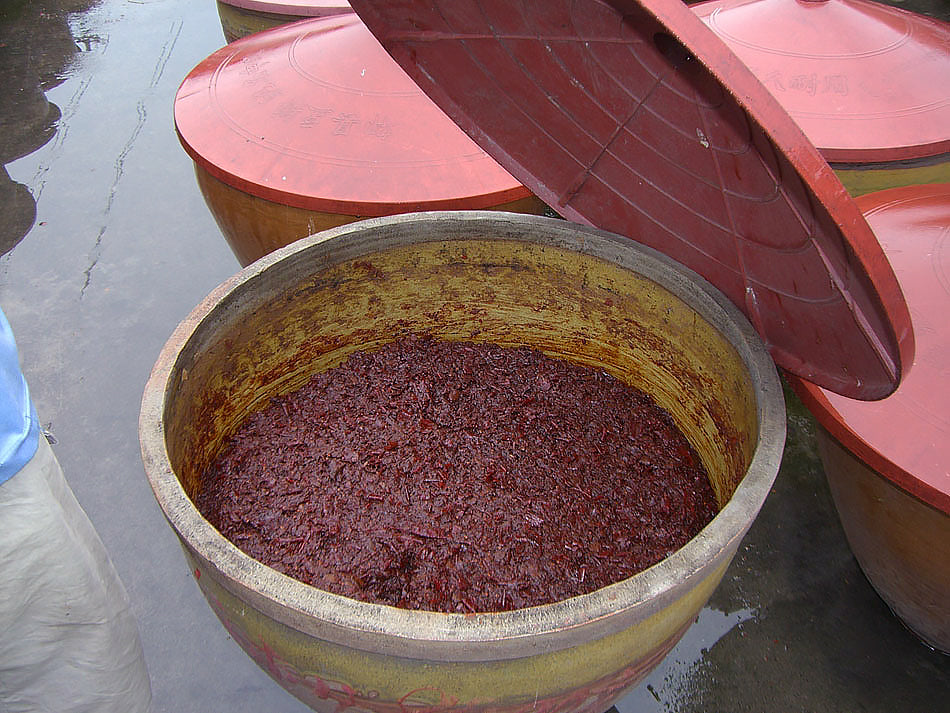
Made in the Pidu district of Chengdu, formerly called Pixian, this doubanjiang is aged for one year in traditional clay crocks, where it is exposed to the sun and dew and local microbial environment that plays a critical role in developing its inimitable flavor.
This douban has no additives or preservatives. It is a pure concentration of spicy, salty, natural umami.
Our line of Pixian doubanjiang
This 1-year red-oil doubanjiang: Juan Cheng hongyou douban includes added oil, which intensifies the red color and softens the flavor but dilutes fermentation complexity. Use for stir-fries and dishes that call for brighter color and lighter flavor.
3-year doubanjiang: Superior grades of Pixian douban like Yi Feng He are aged longer and contain no added oil. Use for braises, stews and stir-fries with deeper flavor.
Heritage Process
Sichuan Pixian Douban Co. sources high-quality broad beans from Yunnan province, er jing tiao chilies from Sichuan and Guizhou, and well salt from Zigong (Sichuan). In the traditional method, the broad beans are fermented for several months. Separately fermented er jing tiao chilies are then added, and the mixture continues fermenting in earthenware crocks for at least one year. The process involves open-air fermentation and sun-drying, with daily manual turning to ensure fermentation quality.
In the final step, rapeseed oil—unrefined, non-GMO canola—is added to the paste for the red-oil version, creating a thinner, lighter consistency.
Doubanjiang—like soy sauce, black vinegar, and rice wine—is a product of qu fermentation, a method developed in China millennia ago to ferment low-sugar grains and beans using a starter rich in molds and yeast. (The Japanese later adapted this method as koji.) Because the starter is typically made from wheat, most traditional Chinese fermented sauces contain gluten.
History + Honors
Sichuan Pixian Douban Co., with a founding date of 1688, traces its lineage to Chen Yi, the original creator of doubanjiang, and his descendant Chen Shouxin, whose douban was branded Yi Feng He in 1853. Nowadays, a sister brand, Juan Cheng, produces the younger doubanjiangs, while the long-aged doubans are branded Yi Feng He. Both labels qualify as China Time-Honored Brands.
Pixian doubanjiang is a protected geographic indication (like French Champagne or Parmigiano Reggiano) and is one of the few Chinese food products recognized as National Intangible Cultural Heritage, its production process a living tradition passed down through generations.
Compare To
Like Japanese miso and Korean gochujang, doubanjiang is a foundational fermented paste—but its flavor is deeper, spicier and more savory than those two Asian pastes.
China has many fermented bean pastes, usually made with yellow or black soybeans, and they taste very different from Sichuan’s doubanjiang, which is made with fava beans. For Sichuan cooking avoid those called soybean paste, as well as versions of doubanjiang made in other provinces and labeled “toban djan,” as they typically include soybeans and other nontraditional additives.
For true flavor, always look for Sichuan doubanjiang that originates in Pixian/Pidu.
How To Use It
Doubanjiang is highly concentrated and salty—think of it as a seasoning, not a sauce. It is a reddish-brown color and turns a dish deep red when fried in oil to release its aroma and flavor.
You don’t need a recipe to use this powerful ingredient. A tablespoon or two can form the flavor base of almost any stir-fry or braise. Start by frying the doubanjiang in a generous amount of oil before adding other ingredients.
As a general guide
1 tablespoon for a subtle umami-spice base
2 tablespoons for dishes centered on doubanjiang (mapo doufu, twice-cooked pork)
More for high-intensity dishes like shui zhu (water-boiled) beef or mala hotpot
Pixian doubanjiang has visible pieces of chili and bean that do not break down during fermentation. It is often minced before cooking for a smoother sauce. Simply cut and mash the paste with a knife before using. Alternatively, you can process the entire batch in a food processor or with an immersion blender when you first open it.
Storage
This paste is packaged in a plastic jar. Refrigerate after opening to maintain peak freshness.
Properly stored fermented foods do not spoil and can last indefinitely in the refrigerator if not cross-contaminated. While the labeled best-by date is 18 months from production, use your senses—appearance and aroma—as the ultimate guide.
One of Sichuan cuisine's official complex flavor profiles, "homestyle" flavor is built around doubanjiang. Examples include braised dishes, stews and twice-cooked pork.