Add description, images, menus and links to your mega menu
A column with no settings can be used as a spacer
Link to your collections, sales and even external links
Add up to five columns
Add description, images, menus and links to your mega menu
A column with no settings can be used as a spacer
Link to your collections, sales and even external links
Add up to five columns
Roasted Rapeseed Oil (Caiziyou)
四川菜籽油
$22$0
Sichuan’s indispensable cooking oil
If you've ever been in or near a restaurant kitchen in Sichuan, then you know the distinct and delicious smell of caiziyou, the cooking oil of choice in southwest China. Made from roasted oil seeds, minimally processed, it has a natural golden-amber color and unique, vegetal smell. As Fuchsia Dunlop puts it in The Food of Sichuan, "It has a glorious, toasty aroma that adds an extra dimension to chili oil and all kinds of dishes."
"Caiziyou," roughly pronounced "tsigh-zuh yo," simply means vegetable oil, and in Sichuan vegetable oil has traditionally meant rapeseed oil. Rapeseed is the English name for a Brassica that is grown for its oil seeds and is closely related to the Brassica called you cai in Mandarin (yu choy or choy sum in Cantonese), which is grown for its tasty greens.
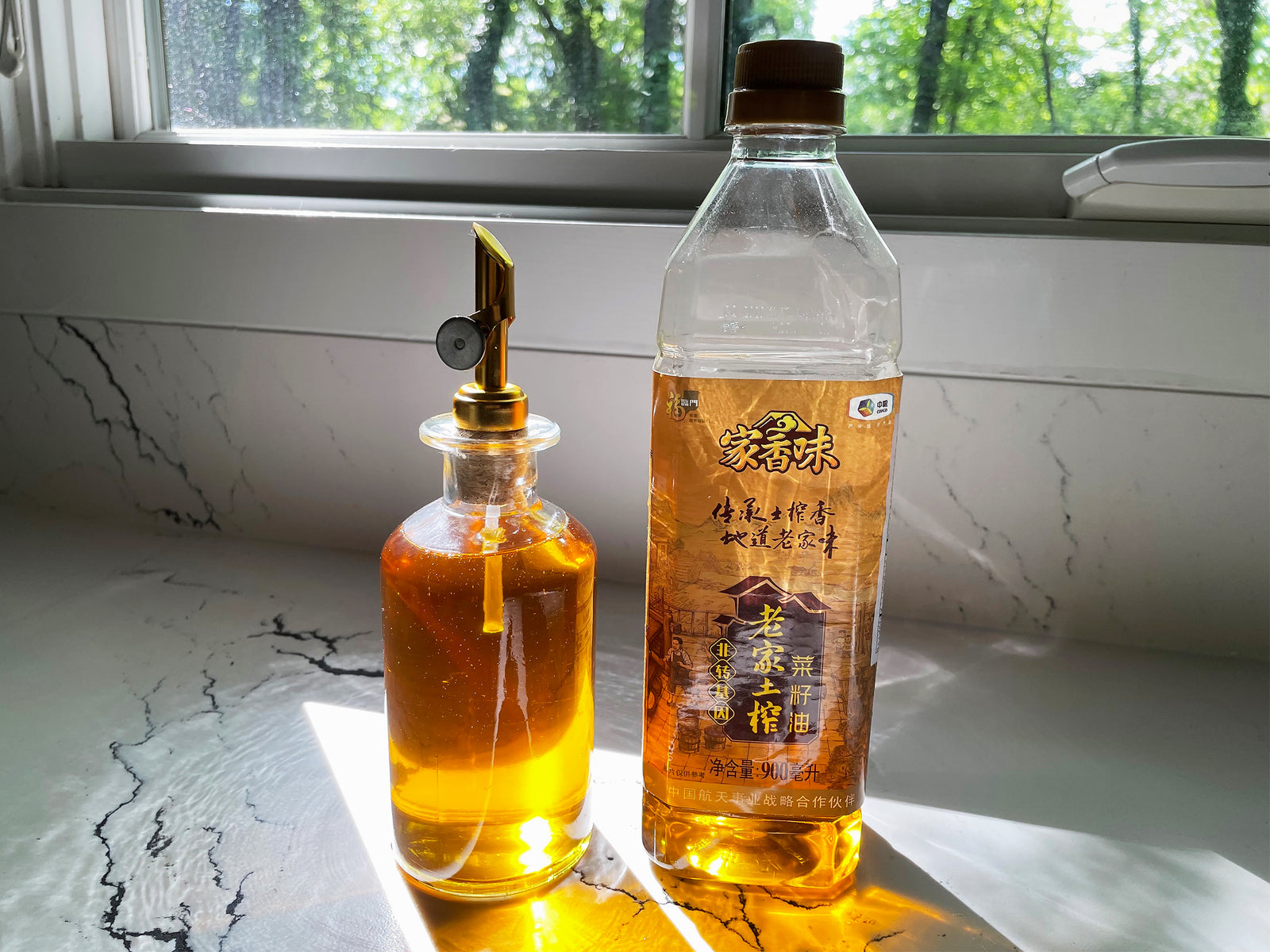
This Zhongliang brand caiziyou is made from deeply roasted, non-GMO oil seeds that are cold-pressed to retain aroma, flavor, vitamins and antioxidants. It is a highly flavored virgin oil that has not been refined, bleached or deodorized, which is exactly why it is prized in Sichuan cooking.
Caiziyou is central to chili oil and the “red-oil” dressings made from it due not only to the fragrance and taste it imparts but also to its high viscosity and adhesive quality. However, because it is a raw oil, it does need to be pre-cooked for some uses, such as chili oil, so be sure to read the How to Use It section.
Note that the manufacturer stamps the PRODUCTION DATE on the front of the bottle. This is NOT the expiration date. The best-by date is on the English label.
Craft + Process
The term rapeseed applies to oilseeds from the species Brassica napus and Brassica rapa. The cultivar used in Sichuan is a non-GMO cross between the two. The seeds are roasted before being cold-pressed, which is an expeller-pressed technique that maintains low temperatures, preserving more flavor, nutrients and antioxidants. (Heat-producing expeller-pressed rapeseed oils have a more neutral flavor and color.) The oil is a raw, or virgin oil.
History + Honors
Although rapeseed oil is one of the oldest edible oils in the world, older strains had a high percentage of possibly-toxic erucic acid, which is why Canada came up with a new, low-acid strain of the plant in the 1970s and called it canola, standing for Canada Oil, Low Acid. Later strains of canola were genetically modified to withstand Roundup, and GMO canola has come to dominate the world market. As is most cooking oil, canola is fully refined, bleached and deodorized to produce a neutral oil for North American tastes.
China’s modern rapeseed oils are made from a different but similar cultivar as modern canola that is called semi-winter rapeseed, which is also low in erucic acid. But the similarity ends there. This caiziyou from Chongqing is made from non-GMO seeds and is cold expeller-pressed instead of chemically or heat processed. It is definitely not made to be neutral, as the seeds are roasted to accentuate the flavor and it retains its natural color, fragrance and taste. It boasts the same homemade taste as the oil long made in the Sichuan countryside.
According to COFCO, the manufacturer of Zhongliang, "Every drop of our traditional rapeseed oil embodies respect for history and the spirit of heritage; it is as if one could travel back in time to experience the unique craftsmanship of the past. Upholding this legacy, we blend traditional techniques with modern processing methods to bring you an oil that is both authentic and rich in historical character."
Specifically, the company cites the city of Guangyuan in northern Sichuan where Sichuan, Shaanxi and Gansu provinces meet as the home of this type of caiziyou, where it has local Intangible Cultural Heritage status.
Compare To
Sichuan chefs and cooks traditionally use only caiziyou to make chili oil, chili crisp and red-oil dressings not only because it has more flavor and aroma than refined oils but because it has superior adhesive quality. This is especially relevant for cold Sichuan dishes where hong you (literally, the red oil produced from making chili oil) dominates. At lower temperatures, caiziyou is more highly viscous and less runny than almost all other oils, meaning it clings to food and delivers flavor very effectively.
Caiziyou is rarely found in the U.S. and requires extra effort and cost to import. This brand of caiziyou is made by COFCO, one of China's largest, state-owned corporations and its largest producer of both canola-style and Sichuan-style roasted rapeseed oils.
Premium caiziyou has a clear, golden-amber appearance and strong grassy/nutty smell.
How To Use It
Caiziyou differs from heavily refined, processed vegetable oils. Below about 410°F (210°C), the rapeseed oil will smell “raw” or grassy. To rid this raw quality, Chinese chefs always heat the oil until smoking and allow it to cool before using.
For making chili oils
Heat caiziyou until smoking, about 410°F/210°C on a medium heat setting, stirring occasionally to ensure heating is even. The oil should be smoking slightly, not heavily.
Turn off heat and allow oil to cool on its own to about 356°F/180°C before proceeding with a chili oil recipe.
For stir-frying
It is not necessary to pre-cook caiziyou for stir-fries, where the oil will be pre-heated and cooked over high heat anyway.
Use caiziyou alone or in combination with rendered pork lard for a restaurant-style flavor base.
Storage
Store caiziyou in a cool, dark place away from direct sunlight and heat sources. Exposure to light and heat can lead to oxidation and degradation of the oil’s quality.
Refrigeration slows down this oxidation process, extending the oil's shelf life and protecting its nutritional value.
Ingredients + Nutrition
Size: 1.5L (50.7 oz)
Ingredients: cold-pressed, roasted rapeseed oil, made from non-GMO seeds
Gluten Free
Nutrition Facts Servings: 100
Serv. size: 1 Tbsp (15ml)
Amount per serving: Calories 132
Total Fat 15g (25% DV), Sat. Fat 0g (0% DV), Trans Fat 0g, Cholest. 0mg (0% DV), Sodium 0mg (0% DV), Total Carb. 0g (0% DV), Fiber 0g (0% DV), Total Sugars 0g (Incl. 0g Added Sugars, 0% DV), Protein 0g, Vit. D (0% DV), Calcium (0% DV), Iron (0% DV), Potas. (0% DV).
One of Sichuan cuisine's official complex flavors, "chili oil" flavor builds a sauce around chili oil to dress dumplings and cold dishes like this three-sliver salad